
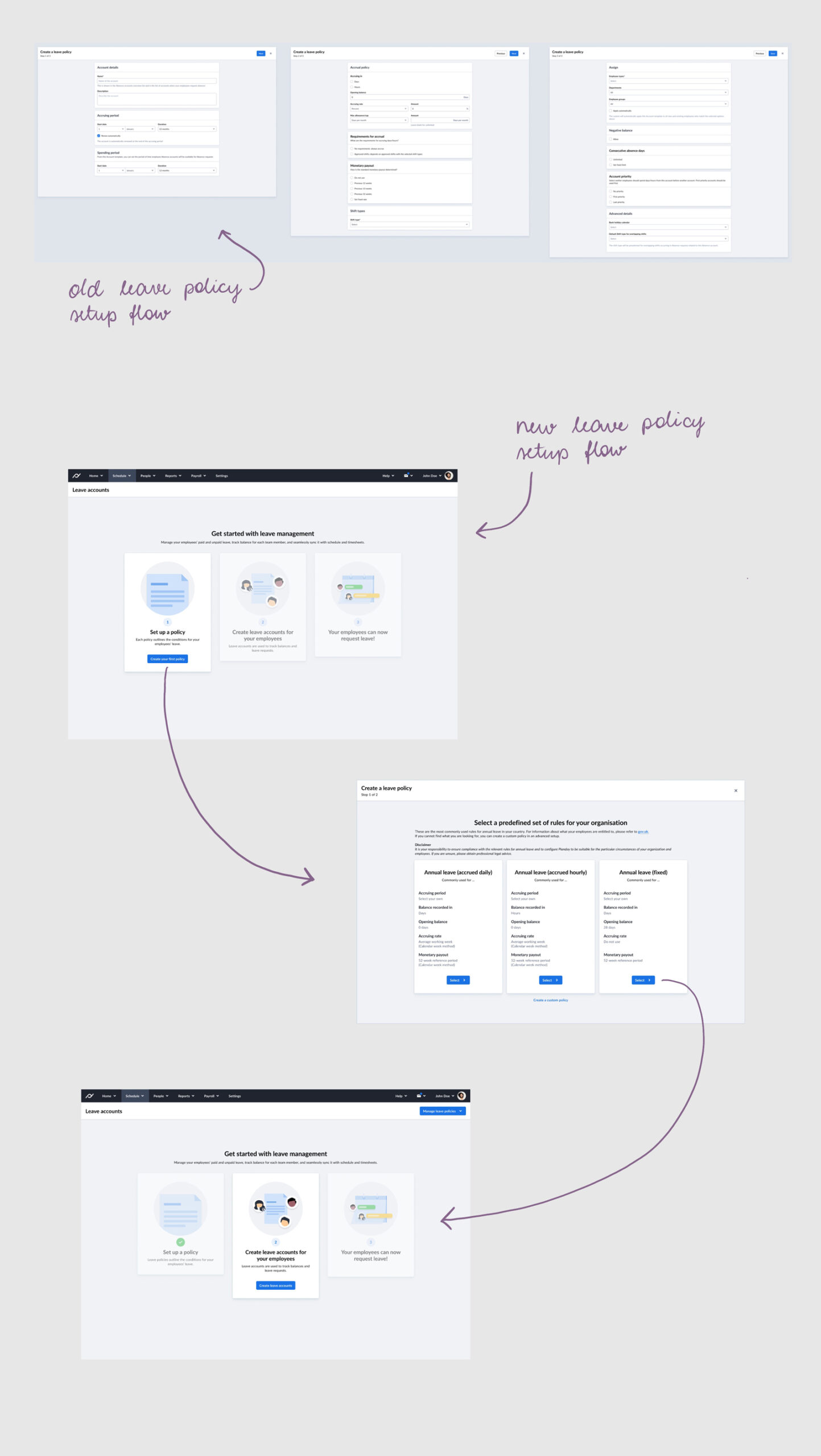
Leave Policy Setup Flow
Company
PlandayYear
2024The Challenge
The existing leave policy setup flow was complex and overwhelming, especially for small and medium businesses (SMBs) in the UK who often lacked in-house HR resources. During initial research and testing, 0% of participants were able to complete the setup flow without assistance, resulting in high support dependency and low adoption.
The goal was to simplify the leave setup process, reduce friction, and enable product-led growth by making it easier for SMBs to onboard themselves without needing help.
Problem Discovery
The project began with a deep dive into user pain points and stakeholder priorities. It became clear that the current interface made it difficult for users to input the right information. Stakeholders emphasised the need for more accurate data and fewer support requests. During this phase, we also defined the scope of the Minimum Viable Product (MVP).
Discovery & Research
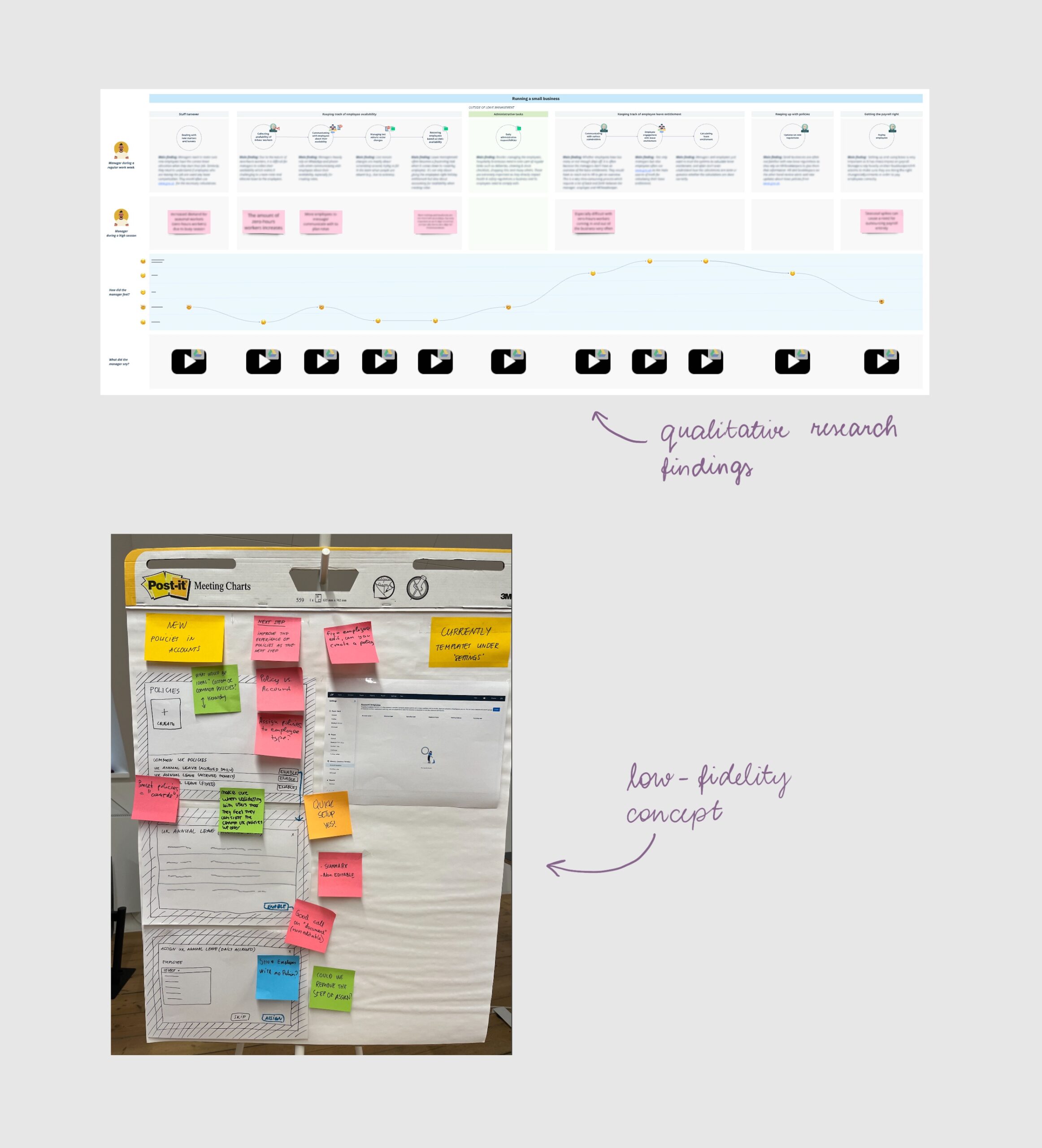
We started by conducting qualitative research with UK-based SMB customers, including interviews and usability testing with 6 participants. Research findings were visualised in a journey map, revealing challenges around:
- Understanding local compliance and leave entitlements
- Communicating with employees who had varying contract types (e.g., zero-hours)
- Navigating a setup flow that assumed too much prior knowledge of leave policy structure
The usability test validated the pain points: none of the participants were able to successfully complete the current setup.
Opportunity mapping & ideation
We facilitated a prioritisation workshop using an Opportunity Solution Tree to structure the insights and align the team around a core opportunity: helping SMBs get started quickly without needing to understand every policy detail upfront.
We sketched low-fidelity concepts and presented the idea of providing pre-set, market-aligned leave policies – offering an “out of the box” experience for new customers in the UK. This approach shifted the cognitive load away from the user, creating a smoother, more guided onboarding experience.
Design & testing
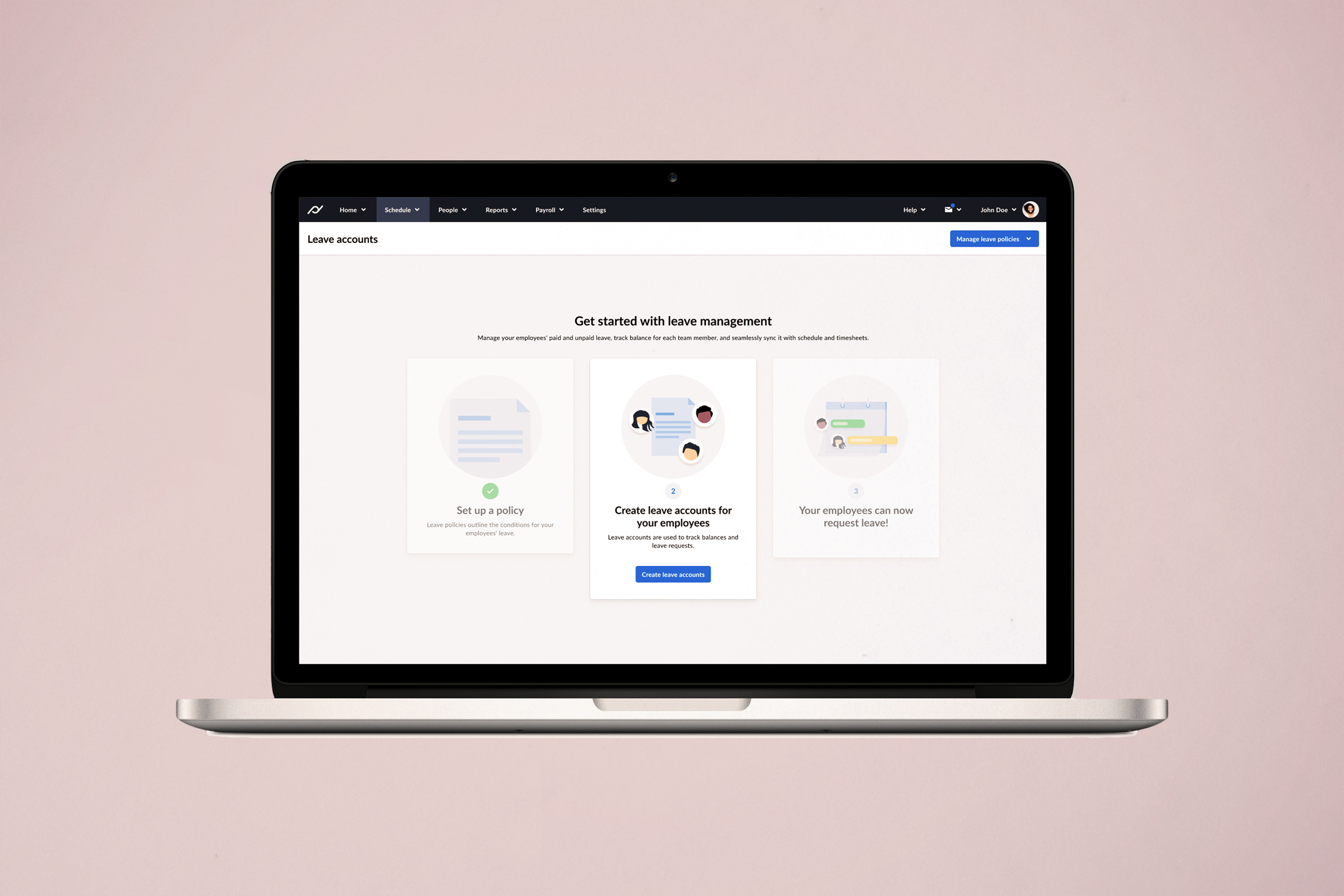
Based on our aligned concept, I designed a new, guided setup flow using a progressive, step-by-step layout to make onboarding more intuitive. The experience was tailored to reduce complexity and boost user confidence, and included:
- A clean, approachable onboarding UI
- Pre-defined leave policy templates based on UK standards
- Clear next steps and in-context guidance throughout the flow
The step-by-step structure was intentionally designed to reduce cognitive load, allowing users to focus on one task at a time without feeling overwhelmed. The design was tested iteratively, and results showed a notable increase in task completion and confidence. Users were able to complete the setup independently, with no support needed. Feedback confirmed the flow felt simple, structured, and easy to follow.
Implementation
I finalised the UI and flow using the company’s design system – while also contributing new UI components designed to support step-by-step guidance and policy selection. These components not only elevated the experience for this project, but were built to be reused in future complex workflows across the platform.
The final result was an onboarding experience that is:
- Less overwhelming for new users
- Aligned with local market needs
- Designed to support product-led growth and self-serve onboarding at scale
Key outcomes (within 2 months post-launch)
- Leave management setup time reduced from 5.9 days to 1.7 days in the UK
- Flow completion rate increased to 63% in the UK, compared to 15-25% in the Nordics (where the old flow is still in use)
- 100% task success rate during usability testing – no support required
- Lowered cognitive load through a simplified, step-by-step guided flow
- New reusable UI components contributed to the company’s design system
- Support requests dropped significantly as users could self-serve with confidence
- Strengthened alignment with product-led growth and market-specific onboarding